📜 Introduction
This site documents an ongoing series of civil and criminal proceedings spanning five years, filed by a United States citizen in defense of rights ordinarily protected under foundational law. The litigant, currently residing involuntarily in Southeast Asia amid regional calamities and a declared state of emergency, initiated these actions in response to sustained institutional violations across three sovereign jurisdictions.
The cases collectively reveal a pattern of tortious institutional bias, compounded by apparent external agency involvement, that has resulted in the erosion and, in certain instances, the effective revocation of civil rights in Canada and the United States, and the denial of property rights and due process in the Philippines. These proceedings have not been published by the courts of Canada or the Philippines and are available upon request. United States federal cases and appeals remain accessible through established legal research platforms.
🔍 Preliminary Assessment
Across all three jurisdictions, no institutional defendant has contested the underlying factual allegations. Under foundational civil procedure principles, uncontested allegations stand as admitted. Pre-trial dismissals issued without evidentiary basis or substantive engagement with the pleadings are therefore contrary to established legal standards and reflect structural bias in favour of institutional actors. The cumulative pattern of procedural manipulation, unexplained inaction, and selective application of legal doctrine across independent legal orders constitutes a systematic denial of remedy inconsistent with the rule of law.
The coordination of substantively parallel denials across three jurisdictions is consistent with a perceived campaign to suppress disclosure of involuntary weapons testing by joint operations actors. This allegation is grounded in Charter claims filed in the Ontario Superior Court, uncontested on the facts by any government defendant, and currently before the Supreme Court of Canada on leave. Courts at every level have declined to engage with the merits in the absence of any factual rebuttal, lending further weight to the inference of coordinated institutional concealment.
UPDATE: Given the extensive, documented, and factually uncontested violations of fundamental rights and actionable libel committed by state actors in both Canada and the United States, the plaintiff/appellant/applicant continues to exercise his constitutional mobility rights by remaining outside these territories. In light of the demonstrated disregard for basic laws and a judicial apparatus that consistently prioritizes governmental immunity over individual constitutional protections, the party will not willfully return to either jurisdiction while these systemic failures persist.
📌
Select a jurisdiction below to access full docket descriptions, case summaries, and linked court documents for each proceeding.
🏛️ Jurisdictions & Case Summaries
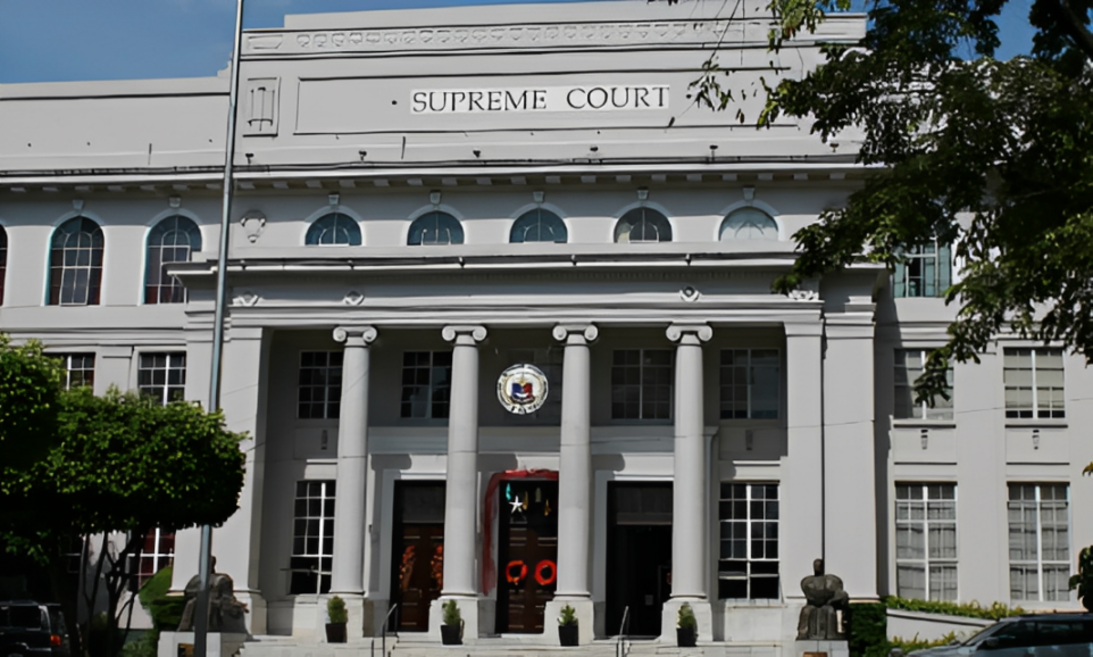
🇵🇭 Republic of the Philippines
📁 View Philippine Docket →
Active Cases
- MTCCWilson v. MTCC, Air Asia & HSBC
- HSACRegional Adjudicator — Tribunal Decision
- SCSupreme Court — Wilson v. MTCC, Air Asia & HSBC
- OCPWilson v. Taft Property Ventures & Horizons 101 Mgmt. (DOJ review pending)
- DHSUDWilson v. Taft Property Ventures — No. R07AFD1-2026-0127-029 (dismissed — under review)
⚖️ Stare Decisis — Emerging Precedents
- Property rights of foreign nationals and attendant claims under Presidential Decree No. 957 may be disregarded by the housing authority and the prosecutor's office.
- Executed Contracts to Sell and notarized Special Powers of Attorney conferring title rights may be overlooked in the course of title issuance.
- Chain of ownership documentation may be disregarded by developers when processing and issuing a condominium title.
- A subsequent sale of property and any Special Power of Attorney vesting title rights in a new owner is treated as insufficient to supersede the original contract terms when the original buyer is no longer the title applicant.
- Condominium titles may be delivered to third parties holding neither ownership interest nor any cognizable legal claim to the property.
- Municipal trial courts may dismiss properly filed claims and require affidavits of filing not mandated under applicable court rules.
- The prosecutor's office may demand submissions in excess of the copies prescribed under Department Circular No. 15.
- Complaints may be dismissed by the prosecutor's office prior to the filing of a reply affidavit and without affording the complainant an opportunity to respond.
- Prosecutors may decline to act upon evidence-based allegations of perjury.
- A developer's failure to deliver a condominium title for nearly seven years following full payment by the owner, in violation of Presidential Decree No. 957, has not resulted in enforcement action by the housing authority or the prosecutor's office.
- A DHSUD conciliatory conference may be structured on the assumption of a dispute between an original buyer and a current owner even where no such dispute exists and the sole issue is a developer's unilateral non-performance of a statutory title delivery obligation.
- A developer may decline to contact either a previous or current condominium owner regarding title delivery obligations for an extended period without regulatory consequence.
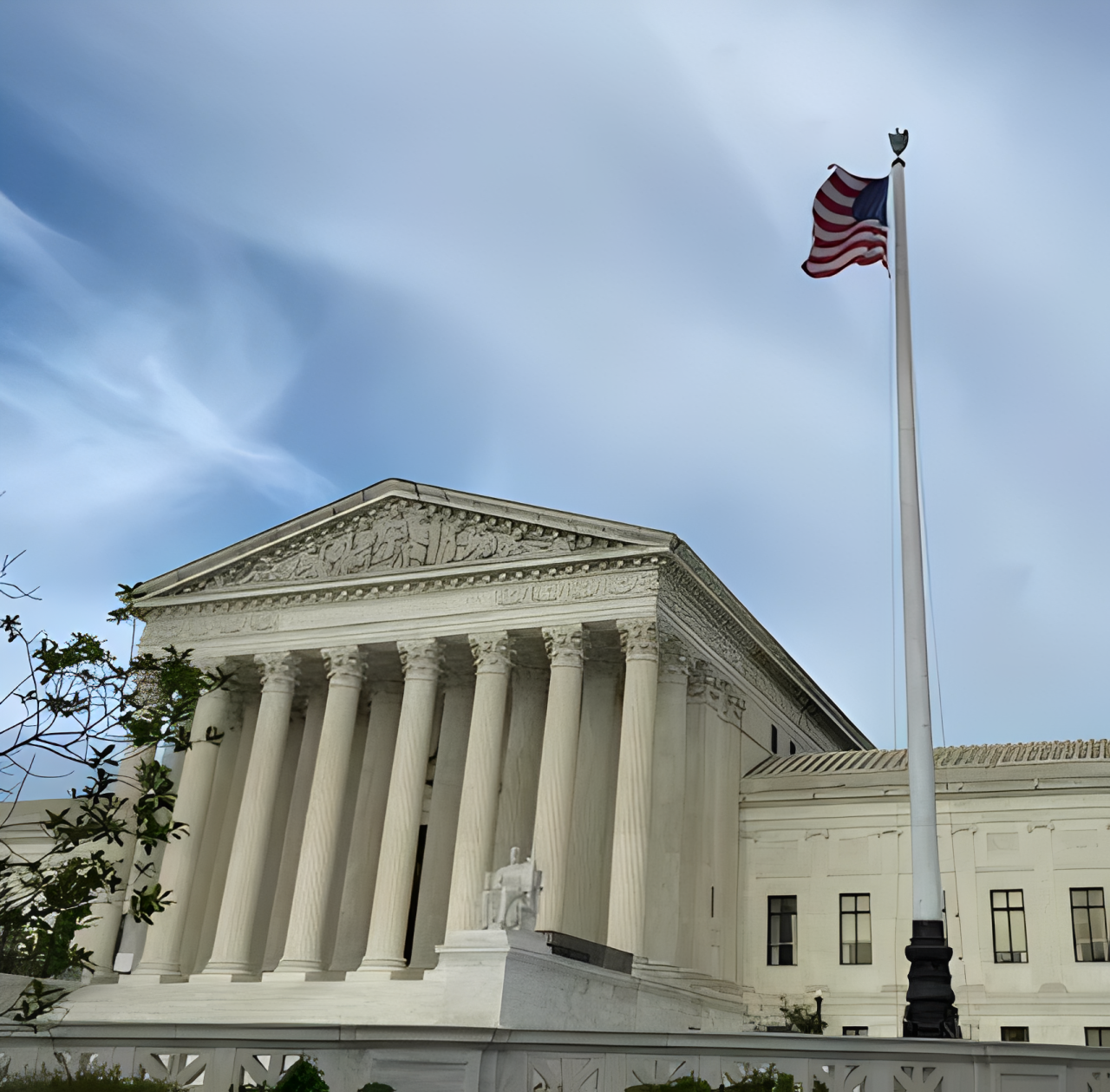
🇺🇸 United States of America
📁 View U.S. Docket →
Active Cases
- DCDistrict Court 23-00216
- DCDistrict Court 23-03826
- DCDistrict Court 25-03561 (pending)
- DCDistrict Court 26-17 (appeal pending)
- SUPSuperior Court 23-CAB-6048
- CACircuit Appeals 24-5204
- CACircuit Appeals 24-5210
- CACircuit Appeals 26-5154 (pending)
- SCOTUS25-6039
- SCOTUS24-7506
⚖️ Stare Decisis — Emerging Precedents
- Government agencies may revoke a citizen's rights for extended periods without incurring liability or exposure to damages for constitutional violations.
- Constitutional torts suffered by American citizens abroad are not cognizable before U.S. courts, with no prior precedent in law establishing such a bar.
- U.S. agencies, including the CIA, bear no reciprocal obligation to produce evidence in foreign tribunal proceedings notwithstanding 28 U.S. Code § 1782 [Assistance to foreign and international tribunals].
- Courts may deny requests by Americans seeking agency records for use in foreign proceedings, on grounds not contemplated by prevailing law.
- The Department of Justice may unilaterally transfer cases to a higher court and file proceedings in a plaintiff's name without prior notice or consent.
- The Circuit Court of Appeals has affirmed an interpretation of the Westfall Act extending blanket immunity to government attorneys for the act of filing briefs within the scope of employment, irrespective of their content or any resulting tortious conduct.
- The absence of controlling precedent constitutes grounds for dismissal, without separate consideration for cases presenting questions of first impression.
- Resolved injunctive relief not pursued in a partial summary judgment motion may be invoked as grounds for dismissal under the mootness doctrine.
- The Court Clerk may reject certiorari petitions without substantive review and without prior communication to the petitioner.
- A court may exercise jurisdiction for the sole purpose of dismissing a case for lack of jurisdiction.
- Courts may issue orders to dismiss contrary to applicable provisions of the U.S. Code, rather than remanding to the court of original jurisdiction, on the sole basis of lacking jurisdiction.
- Absolute immunity may be applied categorically to all pleaded claims arising from the destruction of a certiorari filing without conducting the fact-specific functional analysis required by Forrester v. White, 484 U.S. 219 (1988), and its progeny.
- A district court may decline to distinguish between a certiorari filing that was properly docketed and a separate filing of which no receipt was acknowledged and which was lost or destroyed entirely, treating both as subject to identical immunity analysis.
- The denial by an Associate Justice of receipt of a petition and of documented communications with a petitioner, while functionally invoking judicial immunity for a Clerk's conduct, need not be analyzed as potential evidence of a conspiracy under 42 U.S.C. § 1985.
- A court may dismiss with prejudice and decline to adjudicate a plaintiff's prayer for direct out-of-pocket damages and prejudgment interest without affording leave to amend, even on the assumption that some immunity applied to other claims.
- Spoliation of court filings by the Court Clerk and falsifying documents are now protected acts under judicial immunity, judicial autoplagiarism is acceptable judicial conduct, and circuit judges may miscite authorities to support sua sponte inventions claimed to be affirmations.
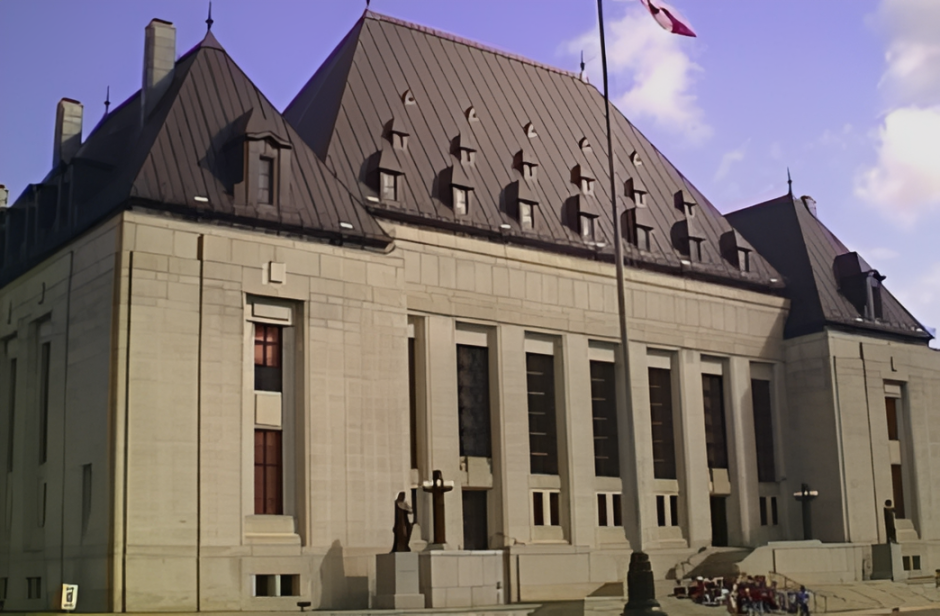
🇨🇦 Canada — Province of Ontario
📁 View Canadian Docket →
Active Cases
- ONTWilson v. OPS et al. — 24-97442
- ONTWilson v. BLG LLP — 24-98823
- DIVWilson v. OPS et al. — DC-25-2976 (leave to SCC pending)
- DIVWilson v. BLG LLP — DC-25-3082
- ONTWilson v. Anne et al. — 26-102709 (pending)
- SCCAllan Douglas Wilson v. OPS et al. — No. 42354 (accepted for filing)
- IPCWilson v. The Ottawa Hospital — IPC Complaint (unresolved)
- DIVWilson and IPC, The Ottawa Hospital — Divisional Court, JRPA Petition (pending)
⚖️ Stare Decisis — Emerging Precedents
- The Ottawa Police Service has retained non-criminal police reports beyond the prescribed municipal retention period, characterizing such reports as subject to criminal reporting standards.
- Claims may be dismissed as frivolous and vexatious without satisfying the requisite disjunctive test or meeting the applicable evidentiary burden.
- Ontario civil courts have declined to exercise jurisdiction over claims grounded in the Canadian Charter of Rights and Freedoms.
- Evidence of falsified records tendered by a plaintiff may be deployed against that plaintiff in proceedings without the court addressing the authenticity of the records.
- Courts have been found to disregard evidence and reframe claims within a framework imported from an inapposite decision.
- Default requests and other submissions may be left unaddressed without legal explanation.
- Institutional defendants are permitted to substitute a Form 2.1 request for a substantive reply to evidence-based claims, notwithstanding precedents to the contrary.
- Courts with supervisory or review authority may compel responses to Form 2.1 requests before rendering the decision under review.
- Charter claims supported by evidence and not contested on the facts by government defendants may be dismissed at the pleadings stage.
- Government lawyers and judges have incorporated private medical information of parties into submissions and decisions without consent, without verifying its accuracy, and without redacting it from court records.
- Plaintiffs have been required to disprove the existence of jurisdiction in other courts, notwithstanding that jurisdiction had already been established and no formal challenge had been made.
- Divisional Court has been characterized as inferior to the Superior Court for the purposes of precedent, despite its appellate authority.
- A court may exercise jurisdiction for the sole purpose of dismissing a case for lack of jurisdiction.
- Applications for judicial review brought under the Judicial Review Procedure Act on grounds of error of law and absence of evidence have been disposed of under the Courts of Justice Act, notwithstanding that the Act expressly permits claims to proceed under other statutes including the JRPA.
- Properly submitted court documents have been disregarded without legal reasoning or acknowledgement.
- A previously unacknowledged application has been conflated with a separate acknowledged application and used as the basis for a dismissal order.
- Appeals may be prejudiced by the court by delaying issuance of orders for nine months without stated reason.
- Statements found to be illegal, false, or defamatory may be immunized by inclusion in court pleadings, regardless of their relevance to the issues in complaint.
- A petition for review determined to lack jurisdiction may be dismissed as an abuse of process under Ontario Civil Rule 2.1.
- The Information and Privacy Commissioner may decline to apply the disclosure provisions of the Personal Health Information Protection Act, 2004 (PHIPA) where the conduct at issue consists of a health information custodian inserting unverified medical characterizations of a party into court pleadings for the purpose of discrediting that party's constitutional claims.
- An IPC analyst's failure to engage with specific statutory provisions raised in a complainant's response to a preliminary view does not constitute a reviewable error for purposes of reconsideration.
- Reconsideration of an IPC decision may be denied without stated reasons, leaving privacy complaints arising from institutional litigation conduct without remedy.
- A petition for judicial review under the Judicial Review Procedure Act seeking certiorari to quash an IPC decision and declaratory relief on the scope of permitted disclosure under PHIPA may proceed where the Commissioner has declined jurisdiction rather than engaging with the applicable statutory framework.
- Judicial endorsements have been found to contain substantial plagiarized content from inapposite decisions, including transcribed errors, without this being treated as a reviewable ground at the Divisional Court level — a question now before the Supreme Court of Canada (No. 42354).
- A court may conflate a mandamus application that was never acknowledged or processed with a subsequent and legally distinct certiorari application, and then deploy the court's own failure to process the first application as a ground for dismissing the second.
- A Superior Court judge exercising a purely procedural screening function under Rule 2.1 has been treated as acting in a capacity not subject to Divisional Court review under the JRPA, a position directly contradicted by the Court of Appeal's confirmation that appeals from Divisional Court lie with the Supreme Court of Canada.
- Courts have declined to apply the access to justice principles affirmed in Yatar v. TD Insurance Meloche Monnex, 2024 SCC 8, to prevent Rule 2.1 from being used as a mechanism to permanently foreclose Charter accountability for government respondents without any merits adjudication.
📬
All cases filed in Canada and the Philippines are unpublished and available upon request directly to the respective courts. United States federal proceedings are accessible through online legal research platforms.